Introduction
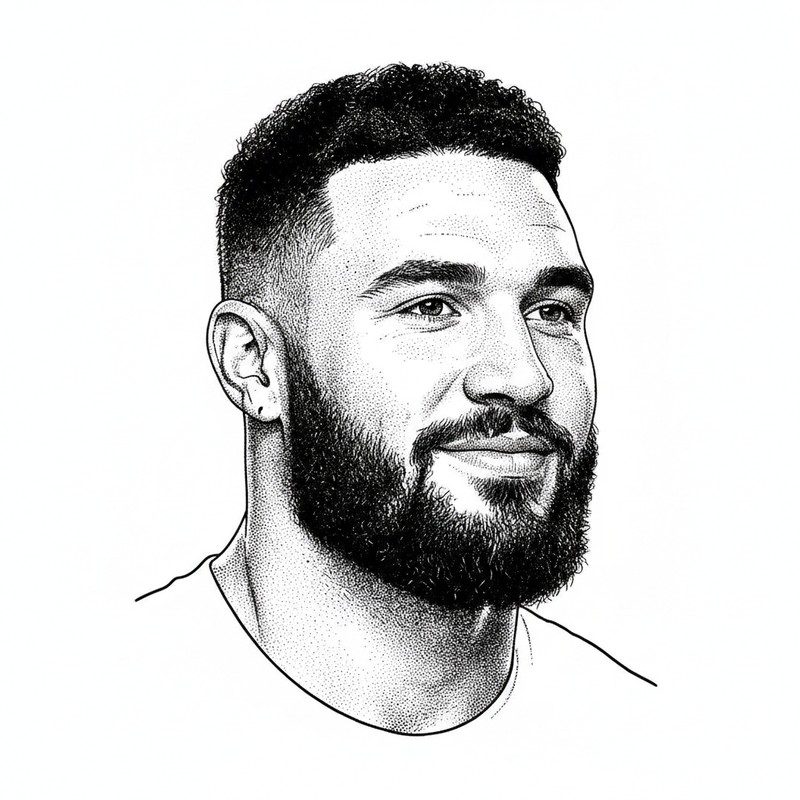
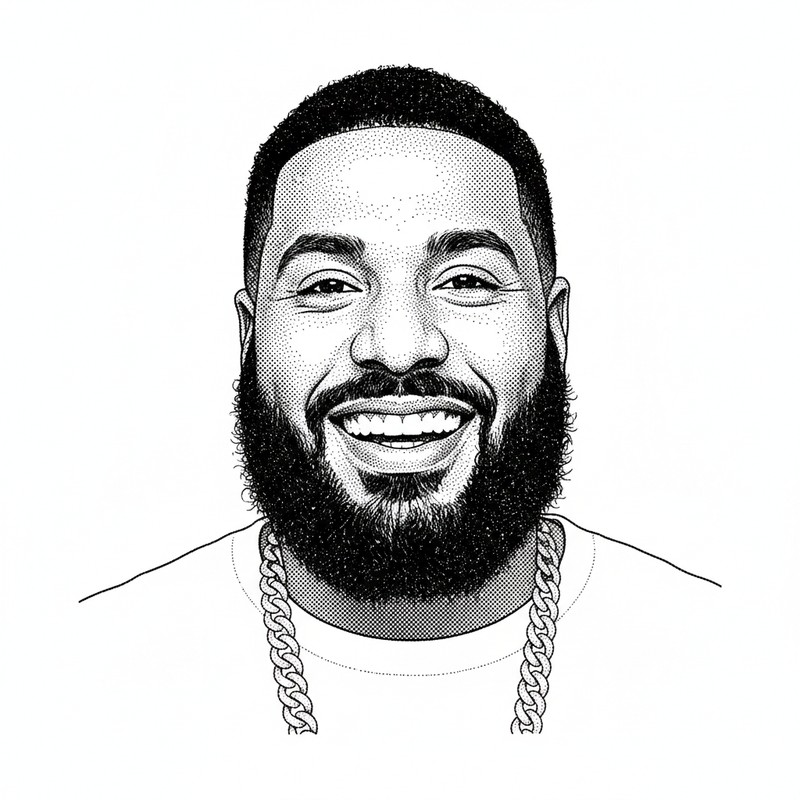
Case File #DJK-2025-0529. Subject: Khaled Mohamed Khaled, operating under the professional designation “DJ Khaled.” Filed under: Executive Producers (Self-Proclaimed); Motivational Speakers (Unsolicited); Individuals Who Have Shouted Their Own Name Over Other People’s Music More Times Than Can Be Reasonably Counted.
The Board opens this file with a note on volume. Everything about DJ Khaled is loud. His ad-libs are loud. His Snapchat stories are loud. His jet-ski content is loud. His declarations of success are loud enough to register on seismographic equipment in neighboring counties. The Board has adjusted its expectations accordingly and will attempt to evaluate Mr. Khaled’s candidacy for the Official N-Word Pass at a decibel level consistent with professional standards.
Khaled Mohamed Khaled was born in 1975 in New Orleans, Louisiana, to Palestinian immigrant parents who ran a small neighborhood shop. This is relevant. New Orleans in the 1970s and 1980s was not a place where you could grow up culturally isolated from Black America even if you tried. The city’s musical bloodstream is Black: jazz, blues, second-line brass bands, bounce music, and eventually the Southern rap explosion that produced Master P, Juvenile, and Lil Wayne. Young Khaled absorbed all of it. His parents’ shop was in a Black neighborhood. The radio played Black music. The customers were, by and large, Black. The vinyl records stacked in the family home included Bob Marley, Luther Vandross, Run-DMC, and Rakim.
By middle school, Khaled had acquired turntables and was teaching himself to blend New Orleans bounce beats with New York boom-bap. The Board notes that this is an impressive skill for a twelve-year-old and a questionable one for a future “executive producer” whose actual beat-making contributions would later be the subject of industry whispers, but we will address that in due course.
After Hurricane Katrina was still just a common name and the levees were intact, teenage Khaled migrated east to Orlando, where he DJ’d small club gigs that paid in pizza and fist bumps. He refined his crowd-control instincts, developed the motivational shouting that would become his trademark, and eventually landed in Miami. There, he secured a slot on WEDR 99 Jamz, where his evening show “The Takeover” became required listening across Liberty City, Little Haiti, and Opa-locka.
The radio booth became a headquarters. Trick Daddy stopped by. Trina stopped by. Fat Joe, Lil Wayne, Rick Ross: everyone stopped by. Khaled functioned as connector, hype man, and, in his own telling, the most important person in every room he entered. He stitched these relationships into his 2006 debut album, Listennn… the Album, which featured the street anthem “Holla at Me.” A year later, We the Best produced “We Takin’ Over,” a posse cut so triumphant it sounded like a championship parade at midnight.
The albums kept coming. More than a dozen studio releases, most certified gold or platinum. A collection of number-one singles. Production credits that read like a VIP guest list for modern rap. Catchphrases that became memes: “Another one.” “Major key.” “Bless up.” “We the best music.” Snapchat stories documenting his jet-ski adventures, his garden of success metaphors, and his apparent belief that every mundane life event (eating breakfast, watering plants, walking through a doorway) constituted a teachable moment for his followers.
The Board acknowledges the career. The Board also acknowledges the question that follows the career like a shadow: does DJ Khaled, Arab-American Muslim from New Orleans, Miami radio institution, and self-appointed Quincy Jones of the Instagram era, qualify for the N-Word Pass? He has built his entire professional life inside Black music. He has promoted Black artists, fed Black musicians from his mother’s kitchen, and reportedly driven young rappers across town at 2 a.m. to make studio sessions. He has also shouted his own name over their songs, collected platinum plaques from their labor, and flaunted luxury purchases during periods of profound economic distress in the communities he claims to represent.
The file is open. The Board will proceed.
Cultural Context
The N-word’s history, from slavery through reclamation through internet meme-ification, is well established in the Board’s records and previous evaluations. For this case, the relevant context is the position of non-Black people of color within hip-hop culture.
DJ Khaled is Palestinian-American. He is not white in the conventional American sense. He faces his own axis of discrimination: Islamophobia, anti-Arab prejudice, the post-9/11 surveillance state. The Board acknowledges this. However, as the Board has noted in previous cases, experiencing one form of oppression does not automatically grant fluency in or access to another community’s cultural property. The experiences are not interchangeable.
Hip-hop has a long and complicated history with non-Black participants. From Latino pioneers like DJ Charlie Chase and Big Pun to Eminem’s ascent in Detroit, the genre has always negotiated boundaries of inclusion. The test, consistently, has been: are you here to serve the culture, or are you here to be served by it? Artists who pass the test demonstrate sustained investment, accountability, and a willingness to be uncomfortable. Artists who fail it tend to extract more than they contribute, treat proximity as credential, and disappear when the culture needs them to show up.
DJ Khaled occupies a complicated position on this spectrum. His service to Miami’s rap ecosystem is genuine and documented. Black musicians in the city vouch for him. That personal loyalty, earned through years of late-night studio runs and radio spins, carries weight. At the same time, his public persona, which is primarily a celebration of his own success, sometimes obscures the people whose music generated that success. The Board will examine both sides.
The Case For
He Championed Black Artists When No One Else Would
This is the strongest argument in Khaled’s file, and the Board gives it appropriate weight. Before YouTube analytics and Spotify playlists determined careers, DJ Khaled used his prime-time radio slot to blast local Miami talent during drive-time hours. Trick Daddy’s career benefited from Khaled’s spins. Rick Ross’s “Hustlin’” gained regional traction through his airplay. Pitbull’s earliest freestyles reached audiences via “The Takeover.” These were not after-the-fact cosigns. They were early-stage investments in artists who had not yet proven commercial viability. That matters.
Every Album Is a Showcase for Black Talent
A DJ Khaled album is, functionally, an anthology. Jay-Z, Beyonce, Lil Baby, Megan Thee Stallion, Future, Drake: the features read like a Hall of Fame ballot. Khaled’s role is curatorial. He assembles the artists, secures the verses, and steps back to let them perform. Whether this constitutes “production” in the traditional sense is debatable (see Cons), but the result is a platform that centers Black voices, and the Board acknowledges the value of that platform.
Philanthropy and Community Engagement Are Documented
Khaled regularly donates school supplies in Overtown, funds scholarship programs through the We the Best Foundation, and participated in disaster relief efforts during Hurricane Harvey, loading trucks with supplies before most celebrities had finished composing their sympathy tweets. The Board has reviewed documentation of these efforts and finds them credible, though their scale relative to Khaled’s personal wealth is modest.
Cultural Immersion Was Organic, Not Adopted
Growing up in a Black neighborhood in New Orleans, eating oxtail dinners at neighbors’ houses, attending high school step shows: Khaled’s cultural fluency was absorbed through daily life, not curated for content. Friends and collaborators from his early career consistently describe him as someone who was simply part of the community, not someone performing membership. The Board values this testimony.
Self-Restraint on Language Use
Despite a career spent in recording studios and on stages where the N-word is commonplace, Khaled has avoided using the word in lyrics, interviews, or public settings. His catchphrases (“Bless up,” “We the best,” “Another one”) are his own constructions, not borrowed AAVE. The Board notes this restraint as evidence of boundary awareness.
The Case Against
The Self-Promotion Overwhelms the Platform-Sharing
This is the central tension in Khaled’s file. Yes, he curates albums that feature Black artists. But the album is called DJ Khaled. His name is shouted over every track. His face is on every cover. His jet-ski is in every promotional video. The Board’s question is not whether Khaled supports Black artists, because he clearly does, but whether the support is structured in a way that centers them or centers him. When the “executive producer” credit on a platinum album goes to the man shouting “We the best” over someone else’s verses, the distribution of credit and compensation deserves scrutiny.
”Executive Producer” Credits Obscure Actual Contributions
Industry sources have suggested that Khaled’s “producer” title sometimes overstates his involvement in the beat-making process. If the actual musical architecture is being built by uncredited or undercredited Black engineers and producers while Khaled collects the executive producer plaque, the arrangement replicates a pattern the Board has seen in other industries: Black labor, non-Black management, non-Black credit. The Board cannot verify these claims definitively but notes them as a recurring concern.
Activism Appears Episodic and Tied to Album Cycles
During the 2020 Black Lives Matter protests, Khaled posted solidarity content on Instagram but did not participate in on-the-ground actions in Miami. The Board has observed this pattern in other files (see Justin Timberlake) and weighs it consistently. When allyship appears primarily during album rollout periods or moments of maximum public attention, it raises questions about whether the commitment is to the cause or to the optics.
Luxury Flaunting During Community Hardship Creates Dissonance
Khaled’s social media presence is a catalog of expensive watches, sports cars, designer furniture, and real estate. This is not unique in hip-hop, where conspicuous consumption is both tradition and aspiration. However, when the person flaunting wealth is not a member of the community that built the genre, and when that community is simultaneously dealing with housing inequality, police violence, and economic precarity, the optics are different. The Board does not require modesty. The Board does require awareness.
Conscious Hip-Hop Is Absent From His Catalog
Khaled’s albums overflow with club bangers and radio singles. They do not, as a rule, feature politically engaged artists like Rapsody, Killer Mike, or Noname. The Board does not expect every album to be a protest record. But the consistent avoidance of conscious hip-hop, in favor of commercially safe tracks, suggests a curatorial philosophy that prioritizes market performance over cultural depth. If you claim to represent “the best” of hip-hop, the absence of its most substantive voices is notable.
Deeper Analysis
DJ Khaled’s career presents a version of a question the Board encounters frequently: what is the difference between a participant and a patron? Khaled does not rap. He does not sing. His beat-making contributions are, by many accounts, limited. What he does is curate, connect, promote, and amplify. He is, to use his own preferred comparison, a Quincy Jones figure: the person who assembles the talent and creates the conditions for great music to happen.
The comparison is not entirely unfair. Quincy Jones was also a connector and curator. But Quincy Jones was Black, which meant his curatorial work existed within a context of shared cultural ownership. When a non-Black curator occupies the same role, the dynamics shift. The question becomes whether the curator is serving the culture or extracting from it, and the answer depends on where the value accumulates.
In Khaled’s case, the value accumulates disproportionately around Khaled. He is the brand. He is the name on the album. He is the face on the jet-ski. The artists who provide the actual music are, structurally, hired contributors to his brand, even when they are more famous than he is. This is not illegal. It is not even unusual in the music industry. But it is a pattern the Board must weigh when evaluating reciprocity.
The Board also notes Khaled’s unique position as an Arab-American Muslim in a culture that has, at times, been hostile to both identities. His public celebration of Ramadan, his openness about his faith, and his navigation of post-9/11 America are real experiences of marginalization. The Board respects this. However, as stated previously, shared experience of discrimination does not automatically translate into permission to access another community’s most guarded cultural property. Solidarity is earned through specific, sustained, demonstrable commitment to that community’s causes. Khaled’s commitment is real but inconsistent.
Compare Martha Stewart’s file, reviewed in our evaluation, where the Board found sustained financial investment, consistent platform-sharing, and genuine personal relationships that produced measurable benefit for Black communities. Khaled’s file contains some of the same elements but at lower intensity and with greater self-promotional overlay.
Official Verdict
DENIED.
Case File #DJK-2025-0529 is hereby closed with a finding of INELIGIBILITY.
The Board recognizes DJ Khaled’s genuine contributions to Miami’s hip-hop ecosystem, his early-career championing of Black artists, his documented community philanthropy, and his self-restraint regarding the word itself. These are real, and they are entered into the record with respect.
However, the disproportionate accumulation of credit and brand value around Khaled relative to the Black artists whose work generates that value, the episodic nature of his activism, the absence of conscious hip-hop voices from his catalog, the opacity around actual production contributions, and the dissonance between luxury self-promotion and community hardship collectively prevent the Board from issuing the Pass.
The Board’s recommendation: continued and expanded philanthropy, greater transparency regarding production credits and compensation structures, inclusion of politically engaged artists in future projects, and activism that extends beyond Instagram posts during moments of peak visibility. Should these conditions be met in a sustained and verifiable manner, the file may be reopened.
The application is denied. The file is closed.