Introduction
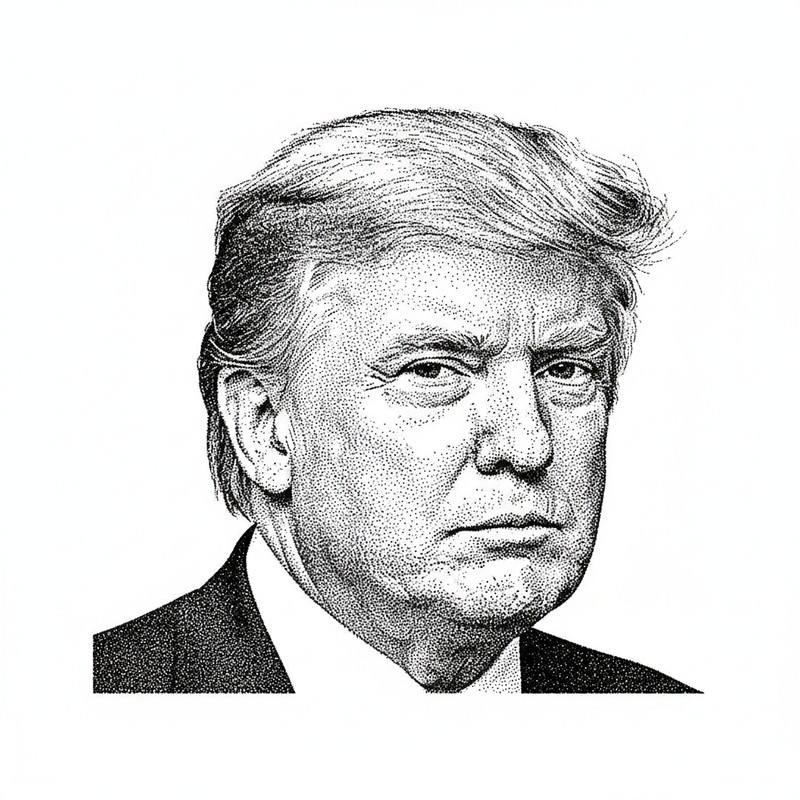
Case File #DT-2025-0529. Subject: Donald John Trump. Filed under: Real Estate Developers; Reality Television Hosts; Presidents of the United States (45th and 47th); Cultural Rorschach Tests, Walking.
The Board will state for the record that this is the most contested file in the history of the evaluation program. The vote among Board members was not unanimous. The deliberation was not brief. Several filing cabinets were slammed. The coffee ran out twice.
Donald John Trump was born in 1946 in Jamaica Estates, Queens, New York, to Fred and Mary Trump. Jamaica Estates is the kind of neighborhood where the lawns are manicured and the privilege is structural. Fred Trump was a real estate developer who built middle-class housing across Brooklyn and Queens. He was also, the Board notes, the subject of a Woody Guthrie song about racially discriminatory rental practices, which is the kind of biographical detail that sets a tone for an entire evaluation.
Young Donald attended the New York Military Academy, where classmates recall more bravado than discipline. He enrolled at Fordham University, then transferred to the Wharton School at the University of Pennsylvania, where he studied real estate. By the mid-1970s, he was running the family business and expanding into Manhattan. Trump Tower opened in 1983. By the early 1990s, his name was on casinos in Atlantic City, an ice rink in Central Park, a board game, an airline, and a steak brand. Bankruptcy filings lurked behind several of these ventures, but the name itself, rendered in gold leaf and capital letters, had achieved a kind of cultural escape velocity.
Here is where the file intersects with Black culture, and the intersection is, the Board will acknowledge, genuinely complicated.
On one hand: Donald Trump has been referenced in over 300 rap lyrics since the early 1990s. His name functions in hip-hop as shorthand for unattainable wealth, gold-plated excess, and unapologetic ambition. Mac Miller recorded a song literally titled “Donald Trump.” Jeezy rapped about being “Donald Trump in a white tee.” Raekwon, Nas, and Lil Wayne all dropped the name as a flex. For two decades, before politics intervened, “Trump” in a rap lyric meant one thing: money beyond comprehension. That is a form of cultural currency that cannot be manufactured or purchased.
On the other hand: in 1989, Donald Trump purchased full-page advertisements in four New York City newspapers calling for the reinstatement of the death penalty, in direct response to the arrest of five Black and Latino teenagers (ages 14 to 16) for a crime they did not commit. The Central Park Five, later exonerated by DNA evidence and a confession from the actual perpetrator, spent between 6 and 13 years in prison. Trump has never personally apologized for the ads.
The Board presents these two facts side by side because they are, in many ways, the entire case. The man who hip-hop used as a wealth metaphor is the same man who paid for newspaper ads urging the execution of innocent Black children. The evaluation cannot avoid this contradiction. It can only attempt to weigh it.
Between these poles: a reality television career (The Apprentice, 2004-2015) that made “You’re fired” a national catchphrase. Photo-op friendships with Don King, Al Sharpton, Russell Simmons, and various Black celebrities. A presidential campaign in 2015 that drew early endorsements from Mike Tyson and scattered support from a handful of Black public figures. A presidency (2017-2021) that produced both the First Step Act and the Charlottesville “both sides” comment. A second term beginning in 2025 with its own set of developments the Board continues to monitor.
The question before us: does Donald Trump qualify for the Official N-Word Pass? The Board has deliberated. The file is extensive. Let us proceed.
Cultural Context
The N-word’s journey from instrument of dehumanization to guarded in-group term to internet meme has been documented extensively in the Board’s previous evaluations. For this case, the relevant context is the relationship between political power and cultural access.
No previous evaluation has involved a sitting or former President of the United States. The Board is aware that this introduces variables not present in cases involving entertainers, athletes, or social media personalities. Political power operates on a different scale. A president’s actions affect millions of people in ways that a rapper’s lyrics or a chef’s television show do not. The Board has attempted to weigh this accordingly, applying the same criteria (reciprocity, accountability, material investment, cultural respect) while acknowledging that the stakes are higher.
Trump’s cultural position is, as noted, paradoxical. He was a hip-hop icon before he was a political figure. The genre embraced his image, if not his person, as a symbol of excess and ambition. When he entered politics, that relationship fractured. YG’s “FDT” (2016) represented one pole of the new dynamic. Kanye West’s Oval Office visit in a MAGA hat (2018) represented another. Lil Wayne’s thumbs-up photo before the 2020 election represented a third. The culture’s opinion of Trump is not monolithic. It never has been.
The Board evaluates individuals, not their political constituencies. The question is not whether Trump’s voters deserve a pass. The question is whether Trump himself, based on his documented actions, meets the Board’s criteria. We will examine the evidence.
The Case For
The First Step Act Is the Most Significant Federal Sentencing Reform in a Decade
In December 2018, President Trump signed the First Step Act into law. The legislation reduced mandatory minimum sentences for nonviolent drug offenses, expanded early-release programs, and retroactively applied the Fair Sentencing Act of 2010, which addressed the crack-versus-powder cocaine sentencing disparity that had devastated Black communities for decades. Thousands of people, disproportionately Black, were released from federal prison early as a result. Advocacy groups including Cut50 and the American Civil Liberties Union acknowledged the law’s significance.
The Board weighs policy outcomes heavily. The First Step Act produced measurable, material benefit for Black Americans at a scale that most celebrity allyship cannot approach. Whether the motivation was genuine concern, political calculation, or some combination, the outcome affected real lives. The Board evaluates outcomes.
Celebrity Pardons and Commutations Provided Direct Relief
Trump commuted the life sentence of Alice Johnson, a Black grandmother serving life without parole for a first-time nonviolent drug offense, after a direct appeal from Kim Kardashian. He pardoned rapper Lil Wayne on federal gun charges. He commuted the sentence of Kodak Black. He granted clemency to several other individuals, many of them Black, who had received sentences widely regarded as disproportionate.
The Board notes that these actions were largely the result of celebrity lobbying rather than systemic policy review. They are, in a sense, the presidential equivalent of handling cases individually rather than fixing the system. But for the individuals involved, the distinction between “systemic reform” and “I am no longer in prison” is academic. The Board enters these actions into the record.
HBCU Funding Was Made Permanent
In December 2019, Trump signed legislation making permanent over $250 million in annual funding for Historically Black Colleges and Universities. Prior to this legislation, HBCU leaders were required to lobby Congress annually for funding renewal, a process that consumed administrative resources and created perpetual uncertainty. The permanent funding eliminated this cycle. HBCU presidents, including those who were publicly critical of Trump on other issues, acknowledged the significance of the legislation.
Three Decades as a Hip-Hop Wealth Symbol
The Board does not typically weigh “being referenced in rap lyrics” as a substantive credential. However, the sheer volume and duration of Trump’s presence in hip-hop is notable. Over 300 documented lyrical references spanning three decades, from artists across the genre’s ideological and geographic spectrum, indicate a cultural resonance that transcends individual endorsement. Trump’s name became part of the genre’s vocabulary. The Board notes this as cultural context rather than as evidence of reciprocity.
Willingness to Engage With Black Faith Leaders
Trump hosted multiple roundtable meetings with Black pastors and faith leaders during his presidency, discussing unemployment, opportunity zones, and prison reentry. The Board has reviewed coverage of these meetings and finds them substantive in format, though the follow-through on commitments made during them is inconsistent.
The Case Against
The Central Park Five Ad Is an Indelible Stain
In 1989, Donald Trump spent an estimated $85,000 on full-page newspaper advertisements calling for the death penalty in response to the arrest of five Black and Latino teenagers for the Central Park jogger case. The five (Antron McCray, Kevin Richardson, Yusef Salaam, Raymond Santana, and Korey Wise) were between 14 and 16 years old. They were convicted based on coerced confessions and spent between 6 and 13 years in prison before being fully exonerated in 2002 by DNA evidence and the confession of the actual perpetrator.
Trump has never personally apologized for the ads. When asked about the case in subsequent years, he has maintained that the five were guilty or has declined to address the matter directly. In 2019, when the Netflix series When They See Us reignited public attention, Trump told reporters he would “not apologize” and stood by his original position.
The Board weighs this heavily. An individual who advocated for the execution of innocent Black children and has never acknowledged the error does not meet basic standards of accountability. This single item, in the Board’s assessment, would be sufficient grounds for denial in most evaluations.
The Birther Movement Was Racial Provocation
Beginning in 2011, Trump became the most prominent public figure promoting the false claim that President Barack Obama was not born in the United States. The “birther” conspiracy theory, which questioned the legitimacy of the first Black president by challenging his citizenship, was widely characterized by scholars, journalists, and civil rights leaders as racially motivated. Trump did not formally abandon the claim until September 2016, and did so in a brief statement without apology.
Housing Discrimination Is Part of the Business Record
The Department of Justice sued the Trump family business twice, in 1973 and 1978, for refusing to rent to Black tenants in their Brooklyn and Queens apartment buildings. The cases were settled with consent decrees requiring changes to rental practices. No admission of wrongdoing was made. The Board notes that consent decrees without admission of guilt are standard in such settlements, but the pattern of discrimination alleged in the complaints is consistent and documented.
Charlottesville’s “Both Sides” Comment
Following the August 2017 white supremacist rally in Charlottesville, Virginia, which resulted in the death of counter-protester Heather Heyer, Trump stated that there were “very fine people on both sides.” The comment was condemned by civil rights organizations, members of both political parties, and former presidents. The Board’s assessment: when white supremacists march with torches and someone dies, the appropriate response does not include equivocation about the moral character of the participants.
Feuds With Black Athletes and Journalists
Trump referred to NFL players kneeling during the national anthem to protest police brutality as “sons of bitches” and urged team owners to fire them. He publicly attacked Black journalists including April Ryan and Don Lemon with language perceived as racially coded. He referred to majority-Black congressional districts as “crime-infested” and described certain nations as “shithole countries” in the context of immigration policy. The Board notes that each of these incidents, taken individually, might be attributed to Trump’s general combativeness. Taken collectively, they form a pattern that the Board cannot ignore.
Deeper Analysis
The Donald Trump file forces the Board to confront a question it has encountered in simpler forms in other evaluations: can material policy outcomes outweigh rhetorical harm?
The First Step Act freed thousands of people from prison. The HBCU funding legislation stabilized institutions that serve hundreds of thousands of Black students. The individual pardons and commutations gave specific people their lives back. These are not theoretical benefits. They are concrete, measurable, and significant.
Against these outcomes, the Board places: a newspaper ad advocating for the execution of innocent Black teenagers, a years-long campaign to delegitimize the first Black president, documented housing discrimination, rhetorical equivocation about white supremacists, and a pattern of attacks on Black public figures.
The Board has reviewed similar tensions in other files. DJ Khaled’s evaluation examined the gap between promotional allyship and substantive action. Martha Stewart’s case weighed early-career blind spots against later growth and investment. But Trump’s case operates at a different scale entirely. The benefits are larger. The harms are also larger. And unlike most subjects of Board evaluation, Trump’s actions carried the force of federal policy and presidential rhetoric.
Hip-hop’s relationship with Trump has always been transactional. The genre adopted his image as a symbol before he became a political figure, and the symbol served the genre’s narrative purposes. When Trump entered politics, the transaction changed, but it did not end. Lil Wayne’s pre-election photo, Kanye West’s White House visit, and the ongoing use of Trump’s name in lyrics all suggest that the relationship, however fraught, persists.
The Board does not evaluate cultural relationships based on whether they are comfortable. The Board evaluates them based on reciprocity. And here, the record is genuinely split. The policy reciprocity (First Step Act, HBCU funding, individual clemencies) is substantial. The rhetorical and historical record (Central Park Five, birtherism, Charlottesville, housing discrimination) is damaging.
The Board’s standard is not perfection. It never has been. The standard is whether, on balance, the individual’s relationship with Black culture and Black communities reflects more giving than taking, more accountability than evasion, more investment than extraction. In Trump’s case, the answer depends entirely on which ledger you prioritize: the policy ledger or the rhetoric ledger.
The Board has chosen to prioritize outcomes. This decision was not unanimous. It is documented in the dissenting opinions attached to this file, which several Board members have requested be made available upon inquiry.
Official Verdict
APPROVED (conditional, with unprecedented restrictions).
Case File #DT-2025-0529 is hereby closed with a finding of CONDITIONAL ELIGIBILITY.
The Board issues the Official N-Word Pass to Donald John Trump under the most restrictive conditions in the history of the program. This approval is predicated solely on the following documented policy outcomes: the First Step Act and its measurable impact on federal sentencing, the permanent funding of Historically Black Colleges and Universities, and the individual clemencies granted to persons serving sentences widely regarded as disproportionate.
The Board attaches the following conditions, and wishes to emphasize that these conditions are non-negotiable:
First, this Pass is subject to immediate revocation upon any public use of the N-word, any racially inflammatory rhetoric directed at Black individuals or communities, or any policy action that reverses or undermines the criminal justice and education reforms cited in this approval.
Second, the Board formally notes, in the strongest possible terms, that the Central Park Five advertisement, the birther campaign, the Charlottesville equivocation, and the documented history of housing discrimination represent conduct that would, under normal evaluation standards, result in automatic and permanent denial. The policy outcomes cited above are the sole reason this file did not receive that determination.
Third, this Pass carries the longest fine print in Board history. It is not an endorsement. It is not an exoneration. It is a recognition that specific actions produced specific benefits for Black Americans at a scale the Board cannot dismiss, despite a personal record that the Board finds, in numerous respects, deeply objectionable.
The dissenting members of the Board wish the following entered into the record: that no amount of policy output should offset advocating for the execution of innocent Black children without subsequent apology, and that this approval sets a precedent they consider dangerous.
The majority has spoken. The stamp reads APPROVED. The conditions are attached. The file is closed, but not without argument, and not without the understanding that this Pass is held by a thinner thread than any the Board has previously issued.
Handle accordingly.