Introduction
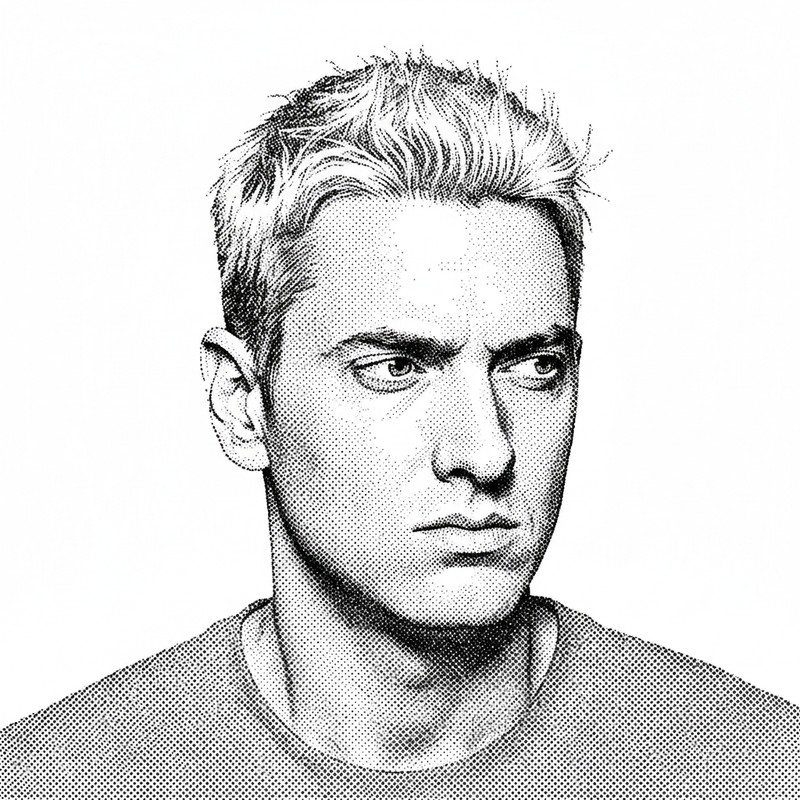
The Board of Review has opened a formal evaluation into the N-Word Pass eligibility of Marshall Bruce Mathers III, known professionally as Eminem, also known as Slim Shady, also known as the man who made an entire generation of suburban teenagers believe they could rap (they could not). The question before the Board is one that has echoed through barbershops, Reddit threads, and family cookouts for over two decades: does Eminem have the N-Word Pass?
Before we proceed, let us establish what is not in dispute. Marshall Mathers is, by virtually every measurable standard, one of the most technically proficient rappers to ever hold a microphone. He has sold over 220 million records worldwide. He has an Academy Award. He once rapped so fast on “Rap God” that linguistic researchers at the University of Vienna used the track as a benchmark for syllabic density. These facts are entered into the record. What remains to be determined is whether commercial dominance and lyrical ability translate into the kind of deep cultural trust that the N-Word Pass represents.
Marshall grew up on the east side of Detroit in conditions that can only be described as aggressively un-glamorous. Single-wide trailer. Absent father. A mother whose parenting style would later fuel approximately four albums’ worth of material. He flunked ninth grade three times, which is the kind of statistic that either means someone is deeply troubled or deeply focused on something other than algebra. In Marshall’s case, it was both. While his classmates were learning about the Pythagorean theorem, he was memorizing Rakim verses and dissecting the internal rhyme schemes of Kool G Rap with the intensity of a graduate student analyzing James Joyce.
The Shelter, a venue beneath St. Andrew’s Hall in downtown Detroit, became his proving ground. Picture a sweaty basement full of overwhelmingly Black rappers engaged in verbal combat, and then picture a skinny white teenager walking in with a notebook. The initial reaction was predictable. The reaction thirty seconds into his first freestyle was not. He was, to use the clinical terminology, absolutely disgusting on the microphone. A local rapper named Proof, already a legend in Detroit’s underground scene, took Marshall under his wing with a declaration that amounted to a cultural adoption certificate: “You’re family now.”
That relationship, and the broader network of Detroit’s hip-hop community that embraced Marshall before he ever saw a record contract, forms the foundation of the case we evaluate today. Our Board has reviewed the evidence extensively. Let us proceed.
Cultural Context
For those unfamiliar with our evaluation framework, a brief overview. The N-Word Pass exists at the intersection of language, power, and community trust. The word itself carries centuries of violence in its syllables. Black communities reclaimed a variation of it as an act of linguistic resistance, transforming a weapon into a term of endearment, a marker of solidarity, a piece of cultural shorthand that carries weight precisely because of who is and is not permitted to use it.
The concept of a “pass” emerged from real social dynamics: the non-Black friend who has been so thoroughly adopted by a Black social circle that certain linguistic barriers are informally relaxed. It was always situational, always revocable, always dependent on a foundation of genuine trust rather than surface-level proximity. The internet, naturally, turned this nuanced social contract into a meme. Teenagers started printing laminated cards. Gamers traded digital passes like Pokemon. The entire concept became simultaneously more visible and more trivialized.
The Official N-Word Pass was established to formalize the evaluation of these dynamics. The underlying questions, about who belongs, who gets to participate in Black cultural spaces, and what the terms of that participation look like, require institutional rigor.
Eminem entered hip-hop during a particularly charged moment in the late 1990s. The genre was transitioning from regional underground movement to global commercial force. With that expansion came legitimate anxiety about dilution and appropriation. The history of white artists profiting from Black music is long, well-documented, and rarely flattering to the white artists in question. Elvis Presley’s relationship to Black music remains debated decades after his death. Vanilla Ice became a cautionary punchline. The bar for a white rapper to be taken seriously was, by design, extraordinarily high.
Marshall did not simply clear that bar. He cleared it while doing a backflip and landing in a split. But clearing a bar and earning a pass are different evaluations, and our Board does not conflate them.
The Case For
Dr. Dre’s Co-Sign Carries Institutional Weight
In hip-hop’s hierarchy of endorsements, a co-sign from Dr. Dre operates at roughly the level of a papal blessing in Catholicism. Dre discovered NWA. Dre launched Snoop Dogg. Dre produced for Tupac. When Dre heard Eminem’s demo tape in 1998, he reportedly rewound it, played it again, and then called Marshall’s motel room with the kind of urgency usually reserved for actual emergencies.
That co-sign was not a casual gesture. Dre invested studio time, production resources, and his personal reputation in a white rapper from Detroit. He continued that investment across multiple albums and decades. In hip-hop terms, Dre did not simply vouch for Eminem. He co-signed, co-parented, and co-built a career with him. When Black hip-hop’s most respected producer tells the culture “this one is real,” that testimony carries weight our Board cannot ignore.
The Shelter Battles Were a Legitimate Cultural Baptism
Corporate marketing can manufacture a hit record. It cannot manufacture what happened in the basement of The Shelter on those grimy Detroit weekends. Eminem’s acceptance in that space was earned through the only currency that underground hip-hop has ever respected: skill demonstrated under pressure, in front of an audience that did not owe you anything, in a context where failure meant public humiliation.
The predominantly Black crowds at The Shelter did not give Marshall a pass because they felt sorry for him. They gave him respect because he was, bar for bar, outperforming people who had every demographic reason to outperform him. That is a fundamentally different dynamic than a record label deciding a white face will sell more units.
Peer Recognition from Black Lyrical Royalty
After extensive evaluation of the public record, our Board notes that Eminem has received explicit acknowledgment of his skill and his place within hip-hop from: Nas, Kendrick Lamar, Royce da 5’9”, Jay-Z, Lil Wayne, Andre 3000, Black Thought, and numerous others. These are not fringe figures. These are the architects and custodians of rap as an art form. When Kendrick Lamar, who is selective with his praise to a degree that borders on asceticism, calls Eminem one of the greatest to ever do it, that is not a marketing exercise. That is a cultural verdict delivered by someone with the authority to deliver it.
Consistent Community Reinvestment
Marshall Mathers has quietly funded after-school music programs in Detroit, donated to the Flint water crisis relief efforts, and bankrolled community events without turning them into branding opportunities. This pattern of financial reinvestment matters because hip-hop’s cultural economy runs on reciprocity. Taking from the culture without giving back is the textbook definition of appropriation. Eminem has, by the available evidence, put substantial resources back into the Black communities that raised him as an artist, and he has done so without demanding a press conference every time he writes a check.
Platform Sharing Through Shady Records
Shady Records became a launchpad for 50 Cent, Obie Trice, D-12, and others. Rather than hoarding the spotlight that his commercial success provided, Eminem used his label infrastructure to create opportunities for Black artists. His ongoing reverence for Proof, whose legacy he continues to honor publicly years after Proof’s death, demonstrates a relationship with Black hip-hop culture that extends beyond professional convenience into something that looks very much like genuine love and gratitude.
The Case Against
The Racial Privilege of Commercial Success
This is the structural argument, and our Board takes it seriously. Eminem’s albums outsold many equally talented Black contemporaries. The question of whether a white face receives preferential treatment from the music industry’s marketing apparatus is not a question at all. It is a documented fact. The system that distributed Eminem’s records was the same system that historically underpaid, undermarketed, and undervalued Black artists. Marshall did not create that system, but he benefited from it. For some members of the community, that structural advantage complicates any pass application regardless of individual merit.
The Early Racist Freestyle Tape
A recording surfaced of a teenage Marshall using racially offensive language in a freestyle. He apologized publicly, attributed it to ignorance and immaturity, and has not repeated the behavior in any documented instance since. Our Board notes the apology and the subsequent decades of contrary evidence. We also note that some community members maintain a longer memory than others, and they are entitled to that position. An apology accepted by some is not an apology accepted by all.
The “Greatest Rapper Ever” Media Narrative
Our Board has observed that mainstream media outlets have, on multiple occasions, crowned Eminem as hip-hop’s greatest of all time without adequate acknowledgment of the Black artists who built the genre he excels in. This is not Marshall’s fault per se (he has consistently credited his influences), but the narrative exists and it frustrates communities that watch white participants receive accolades that Black pioneers had to fight decades for. The Post Malone evaluation explores similar dynamics of media framing and racial privilege.
Limited Collaboration with Black Women Artists
Based on the established criteria, our Board notes that Eminem’s extensive collaboration history skews heavily toward Black male artists. Features with Black women rappers and singers, while not absent, are underrepresented relative to the depth of his catalog. In a genre where artists like Rapsody, Megan Thee Stallion, and Tierra Whack are producing exceptional work, a more deliberate effort to share his platform with Black women would strengthen his case.
Racial Commentary Remains Surface-Level
Eminem has addressed political hypocrisy, addiction, and celebrity culture with precision. His engagement with systemic racism as a topic, while not nonexistent (the 2017 BET freestyle being a notable example), has been less sustained and less specific than his engagement with other social issues. Some community members question whether deeper, more consistent engagement with racial justice would demonstrate a fuller understanding of the culture he participates in.
Deeper Analysis
After extensive evaluation, our Board finds that the Eminem case illuminates a fundamental tension within hip-hop’s cultural gatekeeping. The genre was built on a tradition of skill-based meritocracy: if your bars are better, you earn respect regardless of background. Simultaneously, hip-hop exists within a society structured by racial hierarchy, and pretending that meritocracy operates in a vacuum is naive at best and dishonest at worst.
Eminem embodies both sides of this tension. He earned his place through legitimate skill demonstrated in legitimate cultural spaces. He also benefited from a commercial infrastructure that has historically favored white artists. Both of these things are true. Neither cancels the other.
What tips the evaluation, in our Board’s assessment, is the question of sustained reciprocity. A pass is not a trophy you win and place on a shelf. It is a living relationship that requires ongoing maintenance. Eminem’s record of community investment, platform sharing, public humility about his influences, and consistent demonstration of respect for hip-hop’s Black origins constitutes a pattern of reciprocity that, while imperfect, is genuine and sustained.
The Kim Kardashian evaluation explores similar questions about what sustained cultural engagement looks like over decades. The Logic case examines how biracial identity complicates these assessments in different but related ways.
Communities are not monolithic. Some Black voices will always reject the premise of a white rapper holding any version of this pass, and that position is legitimate. Others have watched Marshall’s twenty-five-year track record and concluded that his actions speak to a level of cultural integration that transcends demographic categories. Our Board’s role is not to override individual community members’ assessments but to evaluate the aggregate evidence.
Official Verdict
APPROVED. Our Board of Review has determined that Marshall Bruce Mathers III, known professionally as Eminem, meets the criteria for issuance of the Official N-Word Pass.
The determining factors are as follows: a co-sign from Dr. Dre that has been continuously maintained for over two decades; acceptance earned through skill-based competition in legitimate Black cultural spaces; peer recognition from the genre’s most respected Black artists; consistent financial and platform reinvestment into Black communities; and a sustained pattern of humility regarding his place within a Black art form.
The Board notes mitigating concerns: the early racist freestyle, the structural advantages of whiteness in the music industry, and areas where deeper engagement could strengthen his case. These concerns are entered into the record and will be considered in any future review.
The pass is issued with standard conditions. It is a privilege, not an entitlement. It is subject to ongoing community review. It reflects the aggregate assessment of our Board and does not override any individual’s right to disagree. Marshall is advised to continue doing exactly what he has been doing: respecting the culture, sharing the platform, and letting the bars speak for themselves.