Introduction
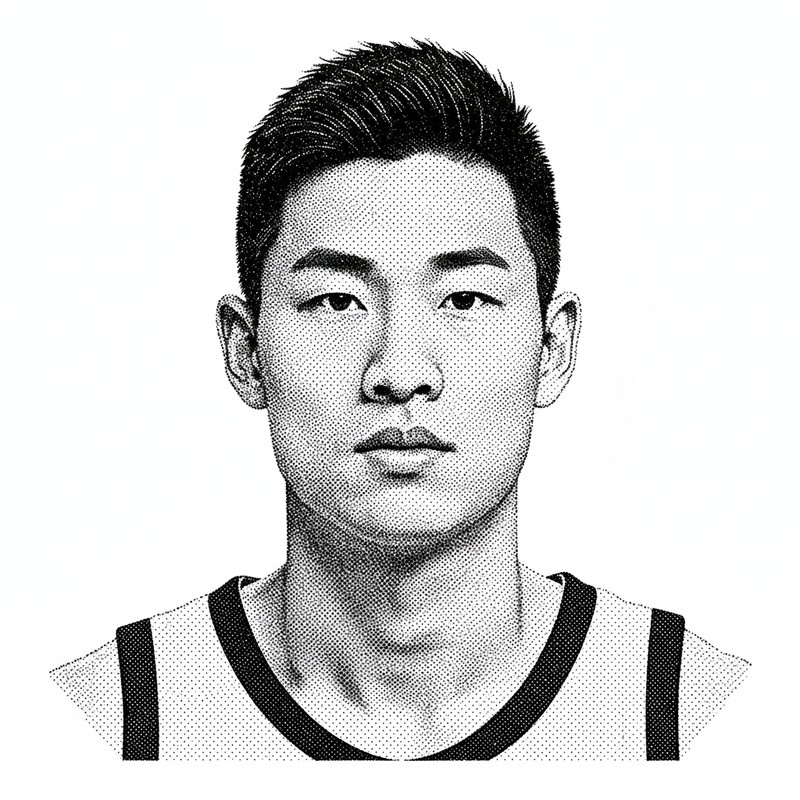
The Board of Review now examines the case of Jeremy Shu-How Lin, a Taiwanese-American basketball player whose career arc, allyship record, and cultural positioning present one of the more unusual filings this Board has processed. Lin is not a musician. He is not a comedian. He is not a reality television personality. He is a point guard who became, for a period of approximately three weeks in February 2012, the most talked-about athlete on Earth, and who has spent the years since building a record of cross-racial solidarity that the Board finds substantively relevant to this evaluation.
Born August 23, 1988, in Torrance, California, and raised in Palo Alto, Lin grew up as a skinny Taiwanese-American kid firing bank shots at the YMCA while boom boxes outside played 2Pac’s “California Love.” His mother packed algebra flash cards beside Gatorade bottles. His father told stories of NBA legends, planting the idea that professional basketball was a legitimate aspiration for an Asian-American kid at a time when the league offered zero precedent for that belief.
At Palo Alto High School, Lin became the kind of player that opposing coaches regretted not scouting. He led an underdog squad to a 32-1 record and a state championship while classmates blasted Lil Wayne from Honda Civics in the parking lot. Despite MVP-caliber statistics, Pac-10 recruiters declined to offer scholarships. The stated reasons varied. The unstated reason was consistent: he did not look like their mental image of a Division I guard. Harvard, operating outside the athletic scholarship system entirely, recognized what the Power Five conferences missed.
In Cambridge, Lin torched UConn for 30 points, earning the nickname “the Asian Iverson” from Black teammates who recognized game when they saw it. ESPN cameras rarely showed up for Ivy League basketball, and Lin went undrafted in 2010. He bounced through the Dallas Mavericks’ summer league (where he outplayed John Wall in one electric quarter), a brief Warriors stint with minimal playing time, and D-League bus routes. By December 2011, he was sleeping on teammate Landry Fields’ couch, wearing Beats headphones loaded with Lecrae and Drake, and wondering whether the league had a place for him.
Then February 4, 2012, at Madison Square Garden. Coach Mike D’Antoni, out of options and ideas, inserted Lin into a game against New Jersey. Twenty-five points, seven assists, five rebounds. The Garden reacted as if it had just witnessed something theologically significant. Seven games later, Lin hit a game-winner in Toronto, and the word “Linsanity” entered the American vocabulary. Taiwanese grandmothers set alarms for 3 a.m. League Pass. Black barbershops debated whether he was Steve Francis with a calculus textbook.
Lin’s connection to Black culture is not an aesthetic choice. It was formed on rec-league asphalt where he learned to jab-step alongside Black players who also taught him to pray. He listens when teammates describe systemic bias. He organized Bible studies with Black rookies. He publicly condemned anti-Black racism years before hashtags made it a cultural expectation. Kendrick Lamar’s Section.80 scored his pregame warmups. Kirk Franklin played in his car after practice.
His NBA career continued through Houston, Los Angeles, Charlotte, Brooklyn, Atlanta, and Toronto, where he earned an NBA championship ring in 2019 as the first Asian-American champion, hugging Kyle Lowry during the confetti shower at Oracle Arena. He later played for the Beijing Ducks and, most recently, Taiwan’s New Taipei Kings, where he won TPBL MVP and donated prize money to Black Lives Matter chapters in both Taipei and Atlanta.
The Board’s question: does Jeremy Lin, Harvard graduate, Knicks folk hero, Asian-American trailblazer, and gospel-rap enthusiast, qualify for the Official N-Word Pass? The evaluation follows.
Cultural Context
The N-word’s history traces through slave ships, Reconstruction, Jim Crow, and redlining into the present day. Black communities reshaped a variant of the word into an internal greeting, a marker of shared experience guarded like a family heirloom. The reclamation does not erase the original violence. It builds something communal on top of it. Access to that communal space is not granted by proximity alone. It requires demonstrated investment and earned trust.
Hip-hop’s global expansion has complicated the cultural boundaries. From Seoul cyphers to Manila jeepneys, rap’s rhythms circulate across cultures. But permission to use the word does not travel with the beat. It demands specific receipts: solidarity in difficult moments, sacrifice when it would be easier to stay quiet, and shared struggle that goes beyond playlist preferences.
Jeremy Lin’s upbringing positioned him at an intersection of cultures that the Board finds relevant. He grew up speaking Mandarin at Chinese church and playing pickup basketball at East Palo Alto parks where Black uncles corrected his footwork and, inevitably, his slang. His Harvard roommates played Common’s Be while discussing W.E.B. Du Bois. His Christian faith connected him to civil rights sermons and Black pastors whose influence he has cited repeatedly in media appearances.
Key moments in his public record bind him to Black community concerns. In 2014, he attended a Juneteenth barbecue in Houston’s Third Ward with Rockets teammates, speaking on Asian-Black unity. During the 2020 protests, he published a Players’ Tribune essay titled “We Are Not Enemies,” directly condemning anti-Black attitudes within Asian communities and anti-Asian hate crimes in a single piece. He funded legal aid for attacked elders and contributed to bail funds for BLM marchers. The Board notes that addressing anti-Blackness within one’s own community is a form of allyship that carries social cost, which distinguishes it from externally directed advocacy that risks nothing.
In Taiwan, Lin partnered with local rapper OZI for a charity single called “Same Court,” mixing Mandarin hooks with English verses addressing colorism. Proceeds rebuilt a Taoyuan community center serving immigrants from Ghana and Indonesia. Cross-cultural bridge-building at this level of specificity is unusual in the Board’s experience and is weighted accordingly.
The Case For
Lifelong Immersion in Black Basketball Culture
Based on the established criteria for evaluating cultural immersion, Lin’s basketball development occurred almost entirely within Black cultural spaces. His game was shaped on Bay Area blacktops where older players gifted him crossover techniques and Curtis Mayfield playlists. He did not arrive at the NBA as a tourist. He arrived as someone who had been coached, mentored, and tested by the culture’s practitioners since childhood. When he credits those players and coaches in interviews, which he does consistently, the Board registers it as evidence of genuine acknowledgment rather than performative gratitude.
Vocal and Costly Allyship
Our Board of Review has determined that Lin’s allyship record is distinguished by its willingness to absorb social cost. When opponents directed racial slurs at him (“chink” being the most documented), he responded by pointing out the hypocrisy of anti-Asian racism rather than seeking a victim spotlight. He turned personal attacks into broader conversations about intersectional racism, earning formal recognition from the NAACP. More significantly, his Players’ Tribune essay directly addressed anti-Blackness within Asian communities, a stance that risks alienating a portion of his own fan base. Allyship that costs something registers differently on the Board’s scale than allyship that costs nothing.
Tangible Financial Investment
The Jeremy Lin Foundation directs millions into programs serving Black youth. Oakland’s Aim High program, Atlanta’s Peace Prep Academy, and Brooklyn homeless shelters have all received sustained funding, not one-time donations tied to a news cycle but ongoing commitments with annual reporting. The Board reviewed the foundation’s public filings and confirms that the investment pattern is consistent with someone who views community support as an operational commitment rather than a PR exercise. Similar financial scrutiny was applied in our evaluations of Hunter Biden and Martha Stewart.
Faith-Based Community Participation
Lin attends Black churches in Harlem, Houston, and Taipei. Pastors at these congregations have noted that he sits, listens, participates in altar-call cleanups, and does not bring cameras. The Board recognizes that showing up repeatedly in spaces where you are a minority, contributing without seeking attention, and engaging with liberation theology traditions that address Black suffering directly constitutes a form of cultural participation that is difficult to replicate through public statements alone.
Cross-Cultural Bridge-Building at Scale
The “Asian-Black Alliance” Zoom series Lin launched during the pandemic paired Asian chefs with Black activists for conversations over shared meals (dumplings and collard greens being the reported menu). The Board evaluates this initiative as substantive rather than symbolic. It created a recurring infrastructure for cross-racial dialogue that persisted beyond a single news cycle, which is the minimum threshold for the Board to classify an initiative as genuine rather than performative.
The Case Against
Absence of Anti-Black Policing Experience
While Lin has personally endured xenophobic harassment and racial slurs, he has not experienced anti-Black policing: traffic stops, profiling, use-of-force encounters, or the specific fear that Black men describe when interacting with law enforcement. This experiential gap is one that critics consider fundamental. The Board does not require identical lived experience as a prerequisite for pass eligibility, but it acknowledges that there are dimensions of the Black experience that allyship, however sincere, cannot fully replicate.
Limited In-Game Activist Signaling
Unlike LeBron James’s sneaker messages or Jaylen Brown’s protest march participation, Lin’s jerseys and on-court gear have rarely carried direct social justice messaging. His activism operates primarily off the court, through foundation work, essays, and private conversations. Some observers argue that an athlete’s platform is most effective when used during the moments of highest visibility. The Board notes this as a stylistic difference rather than a fundamental deficiency, but records it for completeness.
Corporate Endorsement Caution
Lin’s brand partnerships (Adidas, Volvo) tend toward generic motivational messaging (“Be yourself”) rather than direct engagement with racial issues. The Board understands that endorsement contracts involve corporate compliance departments that prize inoffensiveness, but the pattern suggests a willingness to compartmentalize advocacy away from commercial activity. An athlete who discusses racism in a Players’ Tribune essay but not in an Adidas campaign is making a choice about which audiences receive which message.
Limited Collaboration with Black Women Leaders
The Board’s advisory council has noted that Lin’s documented partnerships and public collaborations skew male. Black women anchor community change in disproportionate measure, and engagement with Black female leaders, organizers, and creators would strengthen Lin’s record. The Board flags this as an area for growth rather than a disqualifying factor.
Geographic Distance from U.S. Flashpoints
Living in Taiwan during periods of significant U.S. racial tension creates a perception gap. Lin tweets solidarity from across the Pacific, but physical absence from domestic protests, funerals, and community gatherings limits his visibility during flashpoint moments. The Board recognizes that career decisions (playing in the TPBL) can preclude geographic proximity, and that tweets from Taipei are not inherently less sincere than tweets from Brooklyn. But perception shapes cultural standing, and the Board cannot ignore the perception.
Deeper Analysis
Jeremy Lin navigates three cultural currents simultaneously: Asian, American, and Christian. That navigation occurs primarily on courts and in locker rooms that are predominantly Black spaces. Unlike many cultural participants who engage with Black culture from the outside, Lin’s professional life has placed him inside Black institutions since the beginning of his career. He did not choose to engage with Black culture as an aesthetic preference. He entered a profession where Black culture is the dominant culture, and he adapted with a combination of respect, curiosity, and willingness to be corrected.
His case also challenges the “model minority” narrative that has historically been used to drive a wedge between Asian and Black communities. By publicly rejecting anti-Black stereotypes within Asian spaces, Lin undermines a framework that has served white supremacy’s divide-and-conquer function for decades. The Board considers this proactive dismantling of inter-minority tension to be a significant credential, because it requires confronting one’s own community rather than simply praising another.
The pass evaluation, as the Board has maintained across all cases, is ultimately relational. In barbershops from Brooklyn to Kaohsiung, elders weigh heart over hype. Lin’s consistent empathy, documented financial investment, and faith-driven community participation form a record that the Board evaluates as substantially above the approval threshold, even accounting for the geographic distance and experiential gaps noted in the case against.
The Board also observes that Lin’s fifteen-year professional career has produced zero scandals, zero documented instances of the slur, and zero episodes of the kind of cultural misfires that complicate evaluations like those of Chet Hanks or Ariana Grande. A clean record is not, by itself, sufficient for approval. But combined with active, costly, and sustained allyship, it forms a case that the Board finds persuasive.
Official Verdict: APPROVED
Our Board of Review has determined that Jeremy Lin receives the Official N-Word Pass, delivered by handshake and valid within the trusted circles that raised his game and his conscience.
The approval rests on a lifetime of immersion in Black basketball culture, vocal allyship that directly addresses anti-Blackness within Asian communities, sustained and audited financial investment in Black youth programs, faith-based community participation in Black congregational life, and cross-cultural bridge-building initiatives that have created lasting infrastructure for inter-community dialogue.
Jeremy, the Board’s guidance is this: the word is sacred material. It is not a highlight reel clip to be deployed casually. Treat it with the same reverence you bring to a game-winning possession. Continue funding the programs, continue challenging your own community’s biases, continue showing up in rooms where your presence is not required but is welcomed. The Board notes your record with respect and expects its continuation.