Introduction
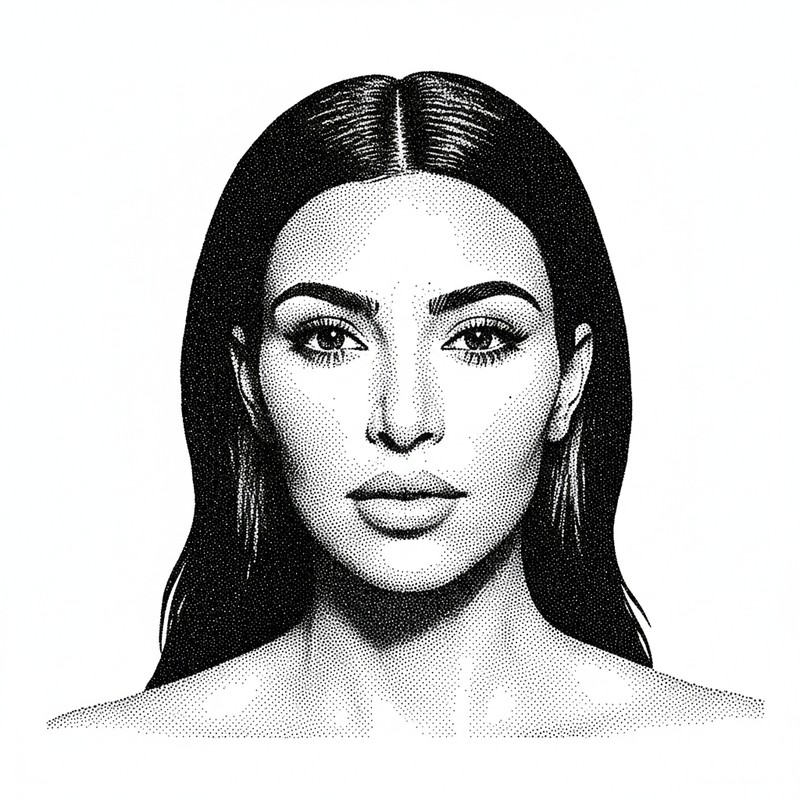
Our Board of Review does not typically begin an evaluation by acknowledging that the applicant once broke the internet with a photograph of her oiled posterior balanced on a champagne glass, but the Official N-Word Pass evaluation process demands full context, and that context includes the cultural footprint of Kimberly Noel Kardashian. The question before our Board is one that has been debated at Thanksgiving tables, in group chats, and across every social media platform with a comment section: does Kim Kardashian have the N-Word Pass?
Let us be clear about what we are evaluating. This is not a case about whether Kim Kardashian is a good or bad person. This is not a case about whether reality television has contributed to the decline of Western civilization (our Board has opinions but they fall outside our jurisdiction). This is a case about cultural trust, reciprocity, and sustained engagement with Black communities, evaluated against the criteria that our institution applies to all applicants.
The biographical record. Kim Kardashian grew up in an Armenian-American family in Los Angeles where proximity to fame was a household condition rather than an aspiration. Her father, Robert Kardashian, was a prominent attorney who gained national recognition during the O.J. Simpson trial. Her mother, Kris Jenner, possessed a talent for converting family dynamics into commercial opportunities that would eventually produce a media empire valued in the billions. Teenage Kim worked as a celebrity closet organizer, sorting through wardrobes for Brandy, Paris Hilton, and other figures whose fame she would eventually eclipse by several orders of magnitude.
In 2007, “Keeping Up with the Kardashians” premiered on E! and introduced the world to a family whose primary talent appeared to be generating content from the act of existing. The show ran for twenty seasons. Kim emerged as its central figure: the sister who could pivot from an emotional heart-to-heart to a contour tutorial without changing vocal register. Fragrances, apps, shapewear lines (Skims, now valued at approximately $4 billion), and a Forbes billionaire designation followed. Whatever one thinks of the Kardashian enterprise, its commercial success is not in dispute.
But commercial success is not what our Board evaluates. We evaluate cultural relationships. And Kim Kardashian’s relationships with Black culture are extensive, complicated, and impossible to summarize in a single paragraph, though we will attempt to summarize them in several.
The romantic timeline is relevant. Kim dated T.J. Jackson (son of Tito Jackson) in her youth, attending Jackson family gatherings where Motown was not a genre but an ambient condition. Later relationships with NFL player Reggie Bush and NBA player Kris Humphries preceded the relationship that would become the defining cultural entanglement of her public life: her marriage to Kanye West. From 2012 to their divorce in 2022, Kim and Kanye existed at the intersection of hip-hop, fashion, and reality television in ways that generated approximately one cultural conversation per week.
Through Kanye, and independently of him, Kim developed relationships with Black artists, designers, and cultural figures. She co-parented four biracial children (North, Saint, Chicago, and Psalm). She began studying law, inspired in part by a criminal justice reform case that led her to the White House to advocate for the clemency of Alice Marie Johnson, a Black grandmother serving a life sentence for a first-time nonviolent drug offense. The clemency was granted.
These facts coexist with other facts. Kim has been accused of cultural appropriation on multiple occasions: cornrows rebranded as “boxer braids” in a Vogue spread, an attempted trademark of the word “Kimono” for a shapewear line (subsequently renamed after backlash from Japanese communities), and a general aesthetic that critics argue borrows from Black women’s bodies, hairstyles, and fashion without adequate acknowledgment.
The pass question, then, is genuinely contested. Let us weigh the evidence.
Cultural Context
The N-Word Pass, as our Board has documented across multiple evaluations, represents a form of communal trust that cannot be earned through commercial transactions alone. It requires sustained engagement, genuine reciprocity, accountability for missteps, and a demonstrated understanding of the historical weight that the word carries. The word began as a weapon of dehumanization, was reclaimed by Black communities as an act of linguistic resistance, and exists today in a space where its use by outsiders is policed not by law but by social consensus.
Kim Kardashian’s case intersects with this framework in several distinctive ways. Unlike Eminem or Logic, Kim is not an artist working within a Black musical tradition. Her cultural engagement with Black communities is personal and philanthropic rather than artistic. She is not sampling soul breaks or rapping over trap beats. She is raising Black children, advocating for incarcerated Black individuals, and moving through Black social spaces in her personal life.
This presents a different set of evaluation criteria. The artistic assessments that dominate other cases (quality of collaboration, respect for genre traditions, creative contribution) are less relevant here. What matters more is the depth and consistency of personal engagement, the willingness to use privilege on behalf of Black communities, and the capacity to receive criticism about cultural missteps and respond with substantive change rather than defensive deflection.
Kim Kardashian also exists within a specific cultural phenomenon: the white (or, in her case, Armenian-American) woman whose physical appearance, personal relationships, and social circle are so thoroughly intertwined with Black culture that the question of insider versus outsider status becomes genuinely ambiguous. This ambiguity is itself instructive. It reveals the limitations of binary frameworks for cultural belonging and the extent to which sustained proximity, when combined with genuine investment, can shift the boundaries of communal acceptance.
The Case For
Prison Reform Work Represents Sustained Institutional Engagement
This is the strongest element of Kim Kardashian’s case, and our Board gives it substantial weight. The Alice Johnson clemency was not a one-time publicity stunt. It was the beginning of a sustained engagement with criminal justice reform that has included: lobbying for the First Step Act, funding legal teams across the Southern United States, securing clemency for over twenty individuals, and enrolling in a four-year law apprenticeship (California allows this path in lieu of law school) with the stated intention of passing the bar and practicing criminal justice law.
Our Board has reviewed the scope of this work and finds it significant for several reasons. First, the individuals Kim has advocated for are disproportionately Black, reflecting the racial disparities in the American criminal justice system. Second, the work requires sustained effort over years, not a single donation or social media post. Third, it involves using her access to political power (including direct White House meetings) on behalf of people who lack that access. This is not performative allyship. This is institutional engagement that produces concrete outcomes for Black individuals and families.
Platform Amplification of Black Creators Is Consistent and Documented
Kim Kardashian’s social media reach is enormous (over 300 million Instagram followers as of this evaluation). She has used that reach to consistently amplify Black hairstylists, makeup artists, designers, and entrepreneurs. These are not occasional shoutouts. They represent a sustained pattern of directing commercial attention and business opportunities toward Black creators. Our Board notes that in an influencer economy where a single Instagram tag can generate six figures in revenue for a small business, this amplification has tangible economic consequences.
Financial Investment in Black-Owned Businesses
During the 2020 protests, Skims donated $1 million to Black-owned small businesses. Individual recipients, including a Brooklyn beauty bar that attributed its survival to the funding, have spoken publicly about the impact. Beyond crisis-moment donations, Kim has invested in and promoted Black-owned brands through her platform with regularity that suggests institutional commitment rather than momentary solidarity.
Motherhood Creates Personal Stakes in Anti-Black Bias
Kim Kardashian is the mother of four biracial children who will navigate the world as Black individuals. This is not an abstract concern for her. Reports indicate she has engaged directly with school administrators over dress code policies affecting her daughters’ hair, shared resources with other parents facing similar situations, and discussed the reality of raising Black children in America with a candor that goes beyond scripted talking points. Our Board notes that parental investment in dismantling anti-Black systems, while not sufficient for pass issuance on its own, represents a form of sustained personal engagement that most applicants cannot claim.
Demonstrated Capacity for Course Correction
When the “Kimono” trademark generated backlash from Japanese communities, Kim renamed the line to Skims. When cornrows were rebranded as “boxer braids,” subsequent appearances with protective styles included credited references to their African origins, informed by consultations with historian Shelby Ivey Christie. These corrections are not retroactive exoneration for the original missteps. They are evidence of a capacity to receive criticism, process it, and change behavior, a capacity that our evaluation criteria weight heavily because the N-Word Pass is a living relationship that requires ongoing accountability.
The Case Against
The “Boxer Braids” Incident Was Not a Minor Misstep
In 2018, Vogue published images of Kim wearing cornrows under the headline describing them as “boxer braids.” Black women have worn cornrows for centuries. They have also faced workplace discrimination, school dress code violations, and social stigma for wearing the same styles that, on Kim Kardashian, were repackaged as a trend. The renaming erased history, and Kim’s participation in that erasure (whether intentional or not) demonstrated a gap between proximity to Black culture and understanding of its daily costs.
Our Board notes the subsequent course correction but also notes that the damage of the original incident cannot be fully undone by retroactive acknowledgment. The Ariana Grande evaluation examines similar dynamics of aesthetic borrowing and the obligations that accompany it.
The “Kimono” Trademark Revealed Branding Instincts That Prioritize Commerce Over Cultural Sensitivity
Attempting to trademark a word that refers to traditional Japanese garments for a shapewear line demonstrated a willingness to commodify cultural terms without adequate consultation or consideration. While the correction was swift, the instinct to trademark first and consider cultural implications second raises questions about whether similar instincts operate in Kim’s engagement with Black culture, where the consequences may be less immediately visible.
Wealth Gap Optics Complicate the Narrative
Kim Kardashian has built a multi-billion-dollar brand on physical aesthetics, including curves, lips, and styling choices, that Black women have been mocked, discriminated against, and penalized for throughout American history. When the same features generate a Forbes cover when attached to a light-skinned Armenian-American woman, the structural inequity is visible and painful. Kim did not create colorism or body-standard double standards, but she profits from them, and our Board’s criteria require applicants to demonstrate active engagement with the structural advantages they receive.
Limited Public Engagement on Police Brutality
Kim’s criminal justice reform work focuses on incarceration. Our Board notes a relative silence on police violence, particularly during high-profile moments such as the Breonna Taylor verdict, when activists were seeking celebrity amplification. Criminal justice reform and police accountability are related but distinct issues, and sustained engagement with both would strengthen Kim’s overall case.
Reality Television Framing Has Occasionally Objectified Black Men
Certain storylines across the Kardashian television franchise have been criticized for framing Black men (athletes, musicians) through a lens that emphasizes physique and romantic drama over personhood. While Kim does not have sole editorial control over the show’s framing, her position as its central figure and executive producer gives her influence over narrative choices that some community members find reductive.
Deeper Analysis
Based on the established criteria, our Board finds that the Kim Kardashian case occupies a unique position in our evaluation portfolio. Most applicants are artists whose relationship to Black culture is mediated through creative work. Kim’s relationship is mediated through personal relationships, philanthropic work, and institutional engagement. This difference changes the relevant criteria but does not lower the bar.
The prison reform work is, in our Board’s assessment, the single most significant factor in this evaluation. It represents exactly the kind of sustained, institutional, outcome-oriented engagement that distinguishes genuine cultural investment from performative allyship. Kim Kardashian has used her access to political power to secure freedom for incarcerated Black individuals. She has done this not once, for a publicity cycle, but repeatedly, over years, with increasing legal sophistication. This matters.
The cultural appropriation concerns are legitimate and our Board does not dismiss them. The “boxer braids” incident, the “Kimono” trademark, and the broader aesthetic dynamic of profiting from features that Black women face discrimination for are all real issues that require ongoing reckoning. But our evaluation criteria do not require perfection. They require a pattern of engagement, accountability, and sustained reciprocity that, in the aggregate, demonstrates genuine cultural trust.
Kim Kardashian’s pattern includes significant missteps. It also includes prison reform outcomes, financial investment in Black businesses, platform amplification of Black creators, personal investment in raising Black children, and demonstrated capacity for course correction when criticism is received. Our Board weighs the aggregate.
The comparison to other evaluations is instructive. Post Malone’s case was denied in part because his engagement lacked institutional depth. Kim’s engagement has institutional depth. Ariana Grande’s case was denied in part because her community engagement was primarily mediated through the entertainment industry. Kim’s extends into legal advocacy, business investment, and personal family life.
The pass, if issued, is not an endorsement of every choice Kim Kardashian has made. It is a recognition that the totality of her engagement with Black communities, measured across decades and evaluated against our established criteria, meets the threshold our Board has set.
Official Verdict
APPROVED. Our Board of Review has determined that Kimberly Noel Kardashian meets the criteria for issuance of the Official N-Word Pass.
The determining factors are as follows: sustained institutional engagement with criminal justice reform that has produced concrete outcomes for incarcerated Black individuals; consistent platform amplification of Black creators with measurable economic impact; financial investment in Black-owned businesses that extends beyond crisis-moment donation; personal stakes in dismantling anti-Black bias through motherhood of biracial children; and demonstrated capacity for receiving cultural criticism and implementing substantive behavioral change.
The Board notes significant mitigating concerns: the “boxer braids” incident and broader appropriation dynamics; the “Kimono” trademark misstep; wealth-gap optics that reflect structural inequities Kim benefits from; and limited public engagement on police brutality as distinct from incarceration reform. These concerns are entered into the record and will be weighted in future review cycles.
The pass is issued on what the Board terms “cultural probation.” This is not a permanent credential. It is a recognition of current standing that is subject to revision based on future conduct. Any recurrence of the appropriation patterns documented in this evaluation will trigger an automatic review. Ms. Kardashian is advised to continue the institutional work that produced this favorable finding, with particular attention to proactive attribution and sustained engagement beyond the entertainment industry.