Introduction
Case File #KJ-2026-0218. Subject: Kylie Kristen Jenner. Filed under: Kardashian-Jenner Extended Universe; Billionaires (Self-Described, Forensically Contested); Individuals Whose Lip Augmentation Sparked a Sociological Debate About the Monetization of Black Physical Features.
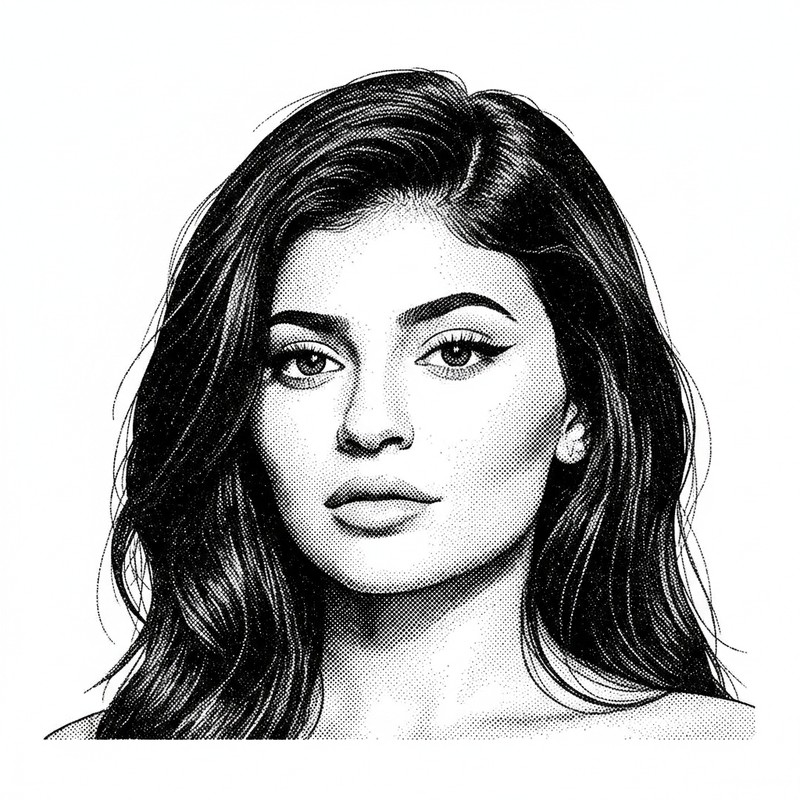
The Board of Review has opened a formal evaluation into the N-Word Pass eligibility of Kylie Kristen Jenner, the youngest member of the Kardashian-Jenner family and the operator of a cosmetics empire built, in significant part, on an aesthetic that borrows from Black beauty standards with the precision of an industrial extraction operation. The question before the Board is whether Ms. Jenner’s proximity to Black culture, Black partners, and Black aesthetic traditions constitutes the kind of engagement that our evaluation framework rewards, or whether proximity has been confused with participation.
The biographical record. Kylie Jenner was born in 1997 in Los Angeles, California, to Kris Jenner and Caitlyn Jenner (then Bruce Jenner). She grew up in Calabasas, a gated community in Los Angeles County where the median household income exceeds $200,000 and the most common form of cultural exchange is a neighbor borrowing your landscaper. She appeared on “Keeping Up with the Kardashians” from the age of ten, became a social media phenomenon by her mid-teens, and launched Kylie Cosmetics in 2015 with a line of lip kits that generated $420 million in revenue within eighteen months.
The lip kits are relevant to this evaluation, and the Board will explain why. Before the launch of Kylie Cosmetics, Ms. Jenner underwent lip augmentation procedures that dramatically increased the size of her lips. She initially denied the procedures, then acknowledged them. The resulting aesthetic, full lips combined with a tanned complexion and frequently worn cornrows, braids, and other hairstyles drawn from Black culture, created a look that numerous commentators identified as the strategic adoption of features associated with Black women, monetized through a brand that sells the look back to consumers.
This is not a cosmetic surgery evaluation. The Board does not regulate lip injections. The Board evaluates the cultural dynamics that surround them, and in this case, those dynamics are substantial.
Cultural Context
The N-Word Pass evaluation framework does not grant points for proximity. Living near Black culture, dating within Black communities, and adopting Black aesthetics are not, individually or collectively, sufficient qualifications. The framework evaluates understanding, reciprocity, and trust. These are categories that require active demonstration, not passive absorption.
The Kardashian-Jenner family’s relationship with Black culture has been the subject of extensive public analysis. The Kim Kardashian evaluation addressed this dynamic at length and reached a more favorable conclusion than the one before us today, in significant part because Kim Kardashian demonstrated sustained institutional engagement with criminal justice reform that extended beyond aesthetic borrowing. The comparison between the two evaluations is instructive: same family, same cultural proximity, different levels of substantive engagement.
Kylie Jenner’s case is distinct from her sister’s because it is almost entirely defined by aesthetics and proximity. The Board has reviewed the public record for evidence of sustained engagement with the structural issues affecting Black communities, and the record is thin.
The Case For
Proximity to Black Family Members and Partners
Kylie Jenner’s personal relationships include significant connections to Black individuals. She has two children with Travis Scott (Jacques Bermon Webster II), a Black hip-hop artist from Houston. Her nieces and nephews include children of Black fathers (Kanye West, Tristan Thompson, Travis Barker is not Black but the broader family tree is relevant). She has grown up in a household where Black partners and their families were consistently present.
The Board notes this proximity. The Board also notes that having Black children and Black partners creates a personal investment in the wellbeing of Black communities that is genuine, because the people you love will navigate a world shaped by anti-Black racism. This is not nothing. It is also not a qualification for the pass.
Kylie Cosmetics Employs and Contracts with Black Professionals
Kylie Cosmetics has, by the available evidence, employed Black makeup artists, models, and creative professionals in its marketing and product development. The brand’s shade ranges have included options for darker skin tones. These are positive business practices. They are also industry standards that were largely forced by consumer pressure following Fenty Beauty’s 2017 launch, which demonstrated that inclusive shade ranges were commercially viable. The Board notes the practices without attributing them to extraordinary cultural commitment.
She Did Not Create the System She Benefits From
This is more of a contextual observation than an argument in her favor, but the Board enters it into the record. Kylie Jenner did not invent the cultural dynamics that allow a white woman to adopt Black aesthetic features and profit from them. She was born into a family that was already navigating these dynamics. She was a child when “Keeping Up with the Kardashians” began airing. The system of celebrity, beauty standards, and racial aesthetic borrowing that her career exploits predates her and will outlast her. Individual responsibility exists within systemic context, and the Board acknowledges the context.
The Case Against
The Lip Kit Empire Is Built on Commodified Blackness
The Board will state this directly. Kylie Jenner augmented her lips to approximate a physical feature that has historically been associated with, and mocked on, Black women. She then built a billion-dollar cosmetics company selling products designed to replicate that look. The result is a business model that extracts commercial value from a Black physical characteristic while the originating community receives no structural benefit.
Black women have been mocked, harassed, and discriminated against for having full lips throughout American history. When a white woman surgically acquires the same feature and builds a fortune on it, the asymmetry is not just aesthetic. It is economic and it is racial. The Ariana Grande evaluation addresses similar questions about aesthetic transformation and its relationship to racial appropriation.
Cornrows, Braids, and Protective Styles Worn as Fashion Accessories
Kylie Jenner has been photographed on multiple occasions wearing cornrows, Fulani braids, and other hairstyles drawn from Black cultural traditions. These hairstyles carry historical and cultural significance within Black communities. They are not fashion accessories. They are cultural practices with roots in African civilizations, adapted and maintained by Black Americans as expressions of identity, community, and resistance.
When Ms. Jenner wears these styles to photo shoots and red carpet events, she does so without the social cost that Black women pay for the same styles. Black women have been told their natural hair is unprofessional, have been fired for wearing braids and locs, and have had to fight for legal protections (the CROWN Act) to wear their hair in styles that Ms. Jenner adopts for an Instagram post. The Board finds this asymmetry directly relevant to the evaluation.
No Evidence of Sustained Community Investment
Our Board has reviewed the public record for evidence that Kylie Jenner has invested in Black community infrastructure: scholarship programs, community centers, criminal justice initiatives, educational funding, or other structural commitments. The record does not contain evidence of sustained institutional investment comparable to what the Board has documented in other evaluations.
Charitable donations exist in the record. They are episodic rather than systematic. They do not demonstrate the kind of structural commitment that the Board’s framework requires, particularly from an applicant whose commercial success is so directly connected to Black aesthetic traditions.
Dating Black Men Is Not a Cultural Credential
The Board will address this directly because it is a premise that underlies much of the public discourse about the Jenner and Kardashian families. Dating Black men, having Black children, and being personally connected to Black individuals does not constitute cultural engagement as defined by our evaluation framework. It constitutes a personal life. Personal lives can be rich, meaningful, and characterized by genuine love across racial lines. They are not pass applications.
The Board has observed a pattern in which proximity to Black romantic partners is presented as evidence of cultural understanding. It is not. Understanding Black culture requires engagement with its history, its institutions, its systemic challenges, and its creative traditions at a level that transcends the personal. Ms. Jenner’s record does not demonstrate that level of engagement.
The Racial Ambiguity Is Performed, Not Inherited
Through a combination of tanning, makeup technique, and aesthetic choices, Kylie Jenner has, at various points, appeared in photographs and on social media with a complexion significantly darker than her natural skin tone. This has led to accusations of “Blackfishing”: the deliberate manipulation of appearance to suggest Black or mixed-race heritage that the individual does not possess.
The Board does not allege intentional deception. The Board notes that the aggregate effect of Ms. Jenner’s aesthetic choices, the lip augmentation, the tanning, the hairstyles, the fashion, creates a visual presentation that draws heavily from Black beauty standards while the individual remains, in every structural sense, a white woman benefiting from white privilege. The gap between the visual presentation and the structural reality is the core of the Board’s concern.
Deeper Analysis
Kylie Jenner’s case illustrates a dynamic that the Board encounters with increasing frequency: the confusion of consumption with contribution. Ms. Jenner consumes Black aesthetics. She consumes Black music through her relationships and social circle. She consumes Black cultural products and incorporates them into her brand. None of this consumption has been accompanied by the kind of structural contribution that transforms a consumer into a participant.
The distinction matters because consumption without contribution is the mechanism by which cultural appropriation operates. Black communities create. Non-Black individuals and corporations consume what is created, profit from it, and reinvest the profits in structures that do not benefit the originating community. This cycle is not unique to Kylie Jenner. It is a feature of American cultural economics that predates her by centuries. But the evaluation before the Board is not about the system. It is about the individual within the system, and Ms. Jenner’s record shows someone who has benefited from the system without meaningfully disrupting it.
The comparison with Kim Kardashian’s evaluation is instructive. Both sisters grew up in the same cultural environment, with the same proximity to Black partners and communities. Kim Kardashian’s record includes sustained engagement with criminal justice reform, including the successful advocacy for clemency in specific cases and the pursuit of a law degree motivated by that advocacy. Whether one agrees with the verdict in Kim’s evaluation or not, the record demonstrates a level of structural engagement that Kylie’s record does not contain.
Official Verdict
DENIED. The Board of Review has determined that Kylie Kristen Jenner does not meet the criteria for issuance of the Official N-Word Pass.
The determining factors are as follows: the commercial empire built on aesthetics drawn from Black beauty standards constitutes extraction without reciprocity; the adoption of Black hairstyles and beauty standards without engagement with the social costs that Black women pay for those same features demonstrates insufficient cultural understanding; the absence of sustained institutional investment in Black communities indicates a consumer rather than contributory relationship with Black culture; and proximity through romantic relationships and family connections, while personally meaningful, does not satisfy the Board’s criteria for cultural engagement.
The Board acknowledges that Ms. Jenner’s children are half Black and that her personal investment in their wellbeing is genuine. This creates a context in which future engagement with Black community issues would be both natural and welcome. Should Ms. Jenner develop sustained institutional commitments to the Black communities whose aesthetic traditions have fueled her commercial success, a future review may consider the application differently. For now, the application is denied.