Introduction
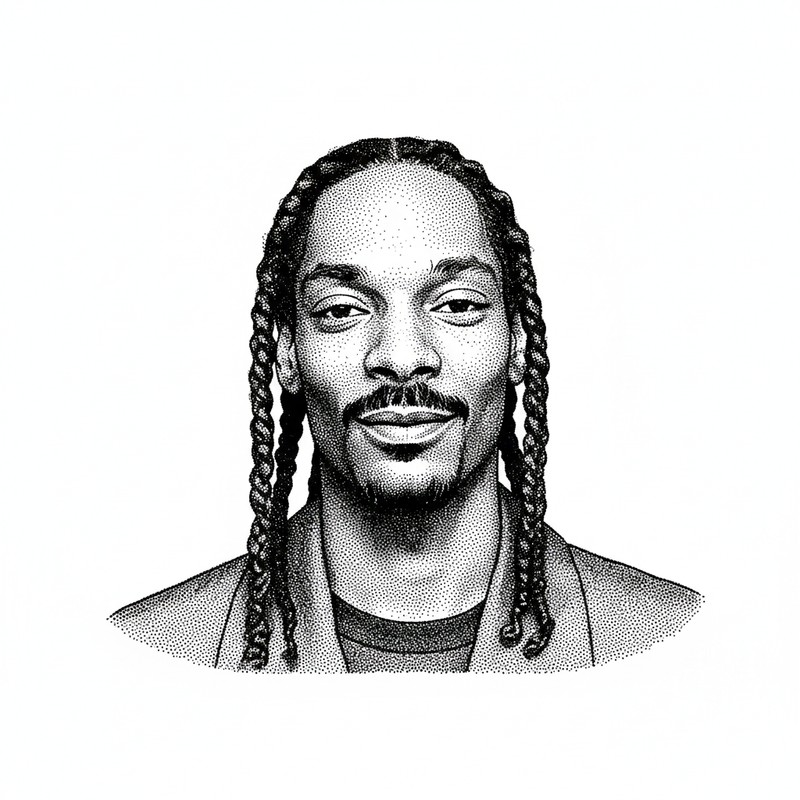
Case File #SD-2026-0219. Subject: Calvin Cordozar Broadus Jr., known professionally as Snoop Dogg, also known as Snoop Lion, also known as Snoop Doggy Dogg, also known as DJ Snoopadelic, also known as Snoopzilla, also known as the Doggfather, also known as the only man in recorded history to testify in a murder trial and subsequently become a cooking show host with Martha Stewart. Filed under: West Coast Hip-Hop Legends; Persons Whose Name Variations Exceed the Board’s Standard Filing Capacity.
The Board of Review has opened a formal evaluation into the N-Word Pass eligibility of Calvin Broadus. The Board is aware that this evaluation may appear, to outside observers, unnecessary. The Board is aware that Snoop Dogg is a Black man from Long Beach, California, who has been a foundational figure in hip-hop for over three decades. The Board is aware that subjecting Snoop Dogg to the same bureaucratic evaluation process applied to, say, Ed Sheeran or Macklemore may seem procedurally absurd.
The Board does not make exceptions to procedure. Procedure is what separates an institution from a suggestion box. Every case that enters the queue receives the full evaluation. The Eminem file received the full evaluation. The Obama file received the full evaluation. The Snoop Dogg file will receive the full evaluation. The machinery processes every document that crosses the desk.
Calvin Cordozar Broadus Jr. was born on October 20, 1971, in Long Beach, California. He was named after his stepfather, Calvin Cordozar Broadus Sr. His biological father, Vernell Varnado, was largely absent. He was nicknamed “Snoopy” by his mother because of his love of the Peanuts cartoon, which is the kind of wholesome origin detail that the Board finds difficult to reconcile with his subsequent career trajectory but enters into the record regardless.
He grew up in the Eastside of Long Beach, joined the Rollin’ 20s Crips, was arrested multiple times, and spent time in jail. He began rapping as a teenager, recorded homemade tapes with his cousin Nate Dogg and friend Warren G, and those tapes eventually reached Dr. Dre, who was in the process of building Death Row Records into the most consequential (and most terrifying) record label in hip-hop history. Dre put Snoop on “Deep Cover” in 1992, then on “The Chronic” later that year. “Doggystyle” followed in 1993, debuting at number one. The rest is, in the most literal sense of the phrase, history.
Cultural Context
For those unfamiliar with our evaluation framework, a brief overview. The N-Word Pass represents communal trust, cultural engagement, and the kind of deep relationship with Black culture that warrants the full privileges of in-group language. The Board evaluates every case on its individual merits, applying the same criteria regardless of how obvious the outcome may appear.
In the case of Calvin Broadus, the cultural context is the man himself. Snoop Dogg is not adjacent to Black culture. Snoop Dogg is not a participant in Black culture. Snoop Dogg is a load-bearing structural column of Black culture. He is so embedded in the cultural architecture that removing him would cause significant sections of the building to collapse.
His influence extends beyond music into television, film, sports commentary, cannabis entrepreneurship, cooking shows, youth football coaching, and a social media presence that has made him, improbably, one of the internet’s most beloved figures across all demographic categories. He narrated a nature documentary. He coached a youth football league. He co-hosted a cooking show with Martha Stewart that somehow became one of the most genuinely enjoyable programs on television. He has done all of this while remaining, at all times, unmistakably and irreducibly himself.
The Board notes this cultural omnipresence because it is relevant to the evaluation. Snoop Dogg does not code-switch. Snoop Dogg does not perform a version of himself calibrated for white audiences. Snoop Dogg is Snoop Dogg in every room he enters, from the BET Awards to the Martha Stewart kitchen to a boardroom full of venture capitalists. This consistency is itself a form of cultural contribution: the demonstration that Black identity does not require modification for mainstream consumption.
The Case For
He Is a Black Man from Long Beach, California
This is the primary argument. It is also, in the Board’s assessment, the only argument that is strictly necessary. Calvin Broadus is a Black man. He was born to Black parents. He was raised in a Black community. He has identified as Black every day of his life. The N-Word Pass evaluation criteria begin with identity, and Mr. Broadus satisfies this criterion with a completeness that leaves no margin for ambiguity.
The Board could, technically, end the evaluation here. The Board will not, because protocol demands thoroughness, and the Board is nothing if not thorough.
Foundational Contributions to West Coast Hip-Hop
Snoop Dogg did not simply participate in the G-Funk era. He, along with Dr. Dre and a small circle of other artists, invented it. “Doggystyle” was not a commercial product that exploited an existing trend. It was the trend. The laid-back, melodic, Parliament-Funkadelic-influenced production style that defined West Coast hip-hop in the 1990s was, in significant part, built on the foundation of Snoop’s vocal delivery: a drawling, unhurried cadence that sounded like what would happen if a person became entirely too comfortable and decided to make a career of it.
That delivery influenced generations of rappers. Without Snoop’s vocal template, significant portions of modern hip-hop’s melodic approach would not exist in their current form. This is a foundational contribution to a Black art form, and it satisfies the Board’s cultural engagement criterion at the highest level.
Sustained Community Investment
Snoop Dogg’s Snoop Youth Football League has been operating since 2005, providing organized football and cheerleading programs to underserved youth in Southern California. The program has served thousands of young people, many of them from the same neighborhoods where Snoop grew up. This is not crisis-response philanthropy. This is two decades of sustained institutional investment in Black communities.
He has also invested in mentorship programs, music education initiatives, and community events in Long Beach and across Southern California. The pattern of reinvestment is long, consistent, and directed at the communities that shaped him. The Board notes this with approval.
Cultural Bridge-Building Without Compromise
The Martha Stewart partnership deserves specific examination, because it represents something the Board finds remarkable. Snoop Dogg built a genuine friendship and professional partnership with a white, upper-class, Connecticut socialite (who also happens to be a convicted felon, which Snoop has noted with evident delight). He did this without modifying his identity, his language, his aesthetic, or his cultural presentation in any way. Martha Stewart adapted to Snoop’s world as much as Snoop adapted to hers.
This is cultural bridge-building in its most effective form: not the dilution of one identity for the comfort of another, but the genuine meeting of two fully realized people who discover unexpected common ground. The Board notes that the common ground appears to be cooking, cannabis, and a shared appreciation for the absurdity of their partnership, which is as solid a foundation as any friendship requires.
Universal Respect Across Hip-Hop Generations
Snoop Dogg is respected by every generation of hip-hop artists, from the original West Coast pioneers to the current generation of SoundCloud-era rappers. He has collaborated with artists across every era without compromising his identity or chasing trends. He has mentored younger artists. He has refrained from the “hip-hop was better in my day” complaints that characterize many legacy artists. He has, in short, aged in hip-hop with a grace and generosity that the Board finds exemplary.
The Case Against
Procedural Requirement: The Board Must Present Counterarguments
The Board’s evaluation framework requires a “Case Against” section for every evaluation. In the case of Calvin Broadus, this requirement presents a logistical challenge, as the Board’s research team has been unable to identify substantive arguments against pass issuance that are not immediately undermined by the overwhelming weight of the evidence in favor.
The Board will fulfill the procedural requirement by noting the following items, which are entered into the record for completeness rather than as genuine counterarguments.
The Death Row Records Era Involved Documented Criminal Activity
Snoop Dogg’s early career was intertwined with Death Row Records, a label whose operations included well-documented instances of violence, intimidation, and criminal enterprise. Snoop himself was tried and acquitted of murder charges in 1996. The Board notes this history as part of the complete record while also noting that acquittal is acquittal, and that the Board is not a criminal court.
The Name Changes Are Logistically Challenging
Calvin Broadus has operated under approximately seven professional names, including Snoop Dogg, Snoop Lion (during a brief reggae period), DJ Snoopadelic, and Snoopzilla. The Board’s filing system was designed to accommodate a reasonable number of aliases per subject. Seven is testing the limits. This is not a substantive objection. It is an administrative observation.
Brief Gospel and Reggae Periods Represented Departures from Core Identity
Snoop’s 2013 album “Reincarnated,” released under the name Snoop Lion, was a reggae project recorded in Jamaica. His 2018 album “Bible of Love” was a gospel record. These departures from his established hip-hop identity were brief, genuine explorations of musical interest rather than calculated commercial pivots. The Board notes them for completeness and moves on.
Deeper Analysis
The Snoop Dogg evaluation is, in the Board’s assessment, a test case for procedural integrity. The outcome was never in question. The evaluation was conducted because the institution’s credibility depends on the consistent application of its processes, regardless of how predetermined the result may appear.
There is, however, a secondary value in subjecting an obviously qualified applicant to the full evaluation. It demonstrates what a complete case file looks like. When the Board evaluates a marginal applicant like Post Malone or a denied applicant like Miley Cyrus, the Snoop Dogg file serves as a benchmark: this is what sustained, lifelong, reciprocal engagement with Black culture looks like. This is what it means to contribute to the culture rather than extract from it. This is the standard against which all other applicants are measured, whether they know it or not.
Snoop Dogg’s cultural position is also instructive because it demonstrates that Black identity is not a monolith. The same man who rapped about gang life on “Murder Was the Case” co-hosts a cooking show with Martha Stewart, coaches youth football, and narrated a nature documentary with a gentle enthusiasm that suggests he genuinely enjoys watching animals. This range, this refusal to be reduced to a single dimension, is itself a form of cultural contribution. It expands the public understanding of what Black men can be, not through advocacy or argument, but through the simple act of being fully himself in every context.
Official Verdict
APPROVED. The Board of Review has determined that Calvin Cordozar Broadus Jr., known professionally as Snoop Dogg (and various other designations that the Board’s filing system has accommodated to the best of its capacity), meets the criteria for issuance of the Official N-Word Pass.
The determining factors are as follows: the subject is a Black man whose identity satisfies the Board’s criteria without qualification; his contributions to hip-hop as an art form are foundational and sustained across three decades; his community investment through youth programs and local engagement demonstrates structural reciprocity; his cultural bridge-building has been achieved without compromise to his identity; and his universal respect within the hip-hop community confirms broad communal acceptance.
The Board notes, for the record, that this evaluation was the procedural equivalent of conducting a fire inspection at a fire station. The result was expected. The inspection was conducted anyway. The institution stands by its process.
The pass has been active since birth. It requires no conditions, no review period, and no renewal. The file is closed. The Doggfather is cleared.